Hazardous Area Classification
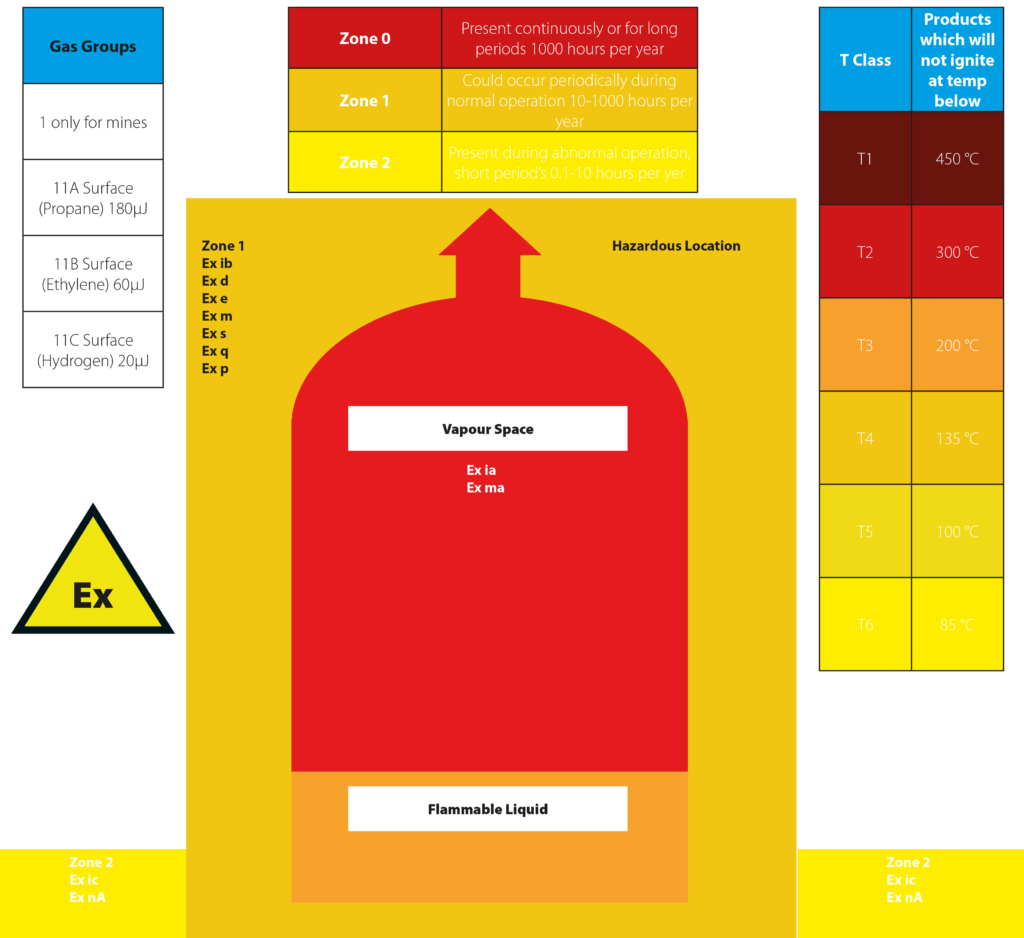
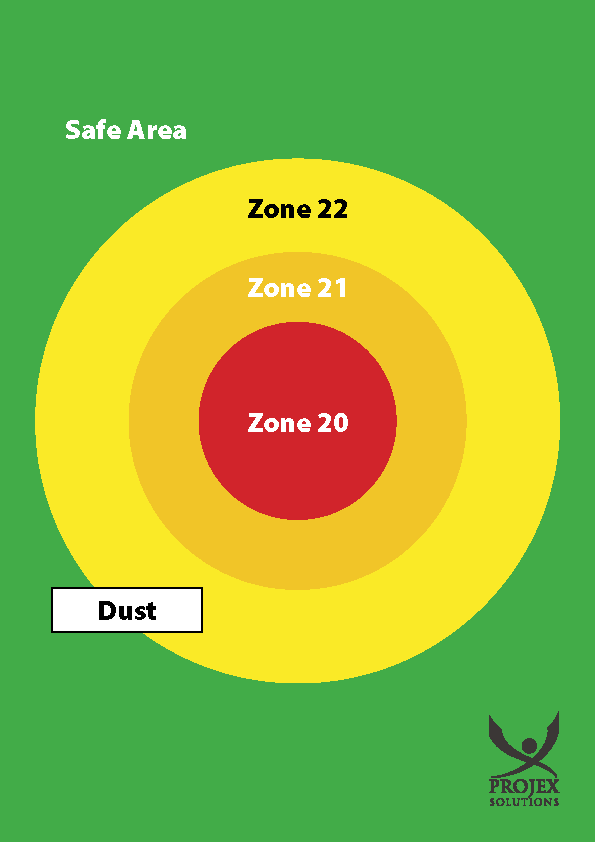
The Hazardous Area Classification concept applies to both combustible gases and vapours, mists, and sprays of combustible liquids, explosives, and combustible dusts. This concept has been in use for many years. It is essentially a systematic method of sub-dividing, into three dimensions, an industrial plant into zones of different categories according to the probability of occurrence of explosive atmospheres. The ultimate objective of this exercise is to keep the likelihood of accidental ignition of explosive atmospheres at a minimum throughout the plant.
There are a variety of advantages to delivering a HAC such as:
- Compliance to the relevant safety regulations
- Safety of Personnel and the workplace
- Reduced risk of fires or explosions.
- Possible cost savings if non-hazardous areas were incorrectly classified as hazardous.
- Electrical/electronic equipment can be specified safely and correctly.
We have many years of expertise and the capabilities required to conduct accurate and specified area classifications for hazardous areas within any process facility.
Compliance to the relevant safety regulations
A HAC ensures that your business is complying to the relevant standards associated with the Health and Safety Executive, failure to do this can result in penalties.
Safety of Personnel and the workplace
A HAC will help to protect staff and business facilities, by properly determining which zones offer safety and which zones are hazardous to workers and facilities. By determining these zones precautionary safety measures can be put in place for protection.
Reduced risk of fires or explosions
There is a reduced risk of fires and explosions, the zones indicate which areas need preventative measures put in place.
Possible cost savings if non-hazardous areas were incorrectly classified as hazardous
You may be taking preventive measures in areas that pose no risk to the business or staff, which can cause an unnecessary cost.
Electrical/electronic equipment can be specified safely and correctly.
Certain zones in a hazardous area require special electrical equipment, this equipment is designed to be safe to operate in hazardous areas.
Hazardous Area Classification – Standards
The most used standard in the UK for determining area extent and classification is:
- BS EN IEC 60079-10-1:2021 – Explosive atmospheres, Part 10-1: Classification of areas – Explosive gas atmospheres
- BS EN 60079-10-2:2015, Explosive Atmospheres, Part 10-2: Classification of areas – Explosive Dust Atmospheres
Other sources/guidelines include:
- Energy Institute, Model Code of Safe Practice Part 15, Area Classification for Installations Handling Flammable Fluids, 5th Edition, October 2024 (EI 15)
- HSG103 – Safe Handling of Combustible Dusts, 2nd Edition, 2003
- HSG176 Storage of Flammable Liquids in Tanks, 2nd Edition, 2015.
- HSG51 Storage of Flammable Liquids in Containers, 3rd Edition, 2015
- Area classification code for petroleum installation, 2002
- Institution of Gas Engineers Safety Recommendations SR25, 2001
Sectors we classify for. Area classification is most often needed on chemical and pharmaceutical plant, on energy projects including hydrogen service, and wherever combustible dust is handled in FMCG and food manufacturing. See all the sectors we work in.
How we approach it
We build the classification from the ground up, source by source. Every credible point of release is recorded – flanges, seals, pump glands, sample points, vents, relief discharges, filling and decanting operations and dust handling. Each is captured with the substance involved, its properties and the operating and release conditions that apply, so the zone that follows can be justified rather than copied from a plant that looks similar.
Ventilation is assessed alongside that, because it usually decides both the extent of a zone and whether an enclosed area counts as adequately ventilated at all. The output goes onto drawings in plan and elevation, layered over your existing layouts, and is supported by a technical report recording the assumptions, data sources and calculations behind every zone. If a third party challenges the classification later, the reasoning is there in writing.
Our process safety and EC&I engineers work together, so the classification carries through into equipment selection, cable routing and inspection planning rather than stopping at the drawing. Engineers hold CompEx certification, work is delivered under our ISO 9001:2015 quality system, and drawings are set up so they can be revised under your change control as the plant develops.
What you get
- A release source register covering every source assessed, with substance and release data
- Gas and dust zone assignments, each with the reasoning recorded against it
- Classification drawings in plan and elevation, showing zone extents clearly
- A zone schedule cross-referenced to the drawings and to plant areas
- A technical report covering assumptions, data sources, calculations and ventilation findings
- An equipment suitability review against the zones produced, flagging non-conformances
- Practical guidance on equipment selection, cable routing and inspection
- Native CAD files and marked-up layouts for your own document control system
When clients typically call us
- A new plant or installation needs classifying before equipment can be procured
- The drawings on the wall are undated, unsigned and have no supporting report
- A change of solvent, feedstock or service is planned, including moves into hydrogen
- Combustible dust is being introduced, or an existing dust handling area has changed
- An inspection has found equipment sitting in a zone it is not rated for
- An insurer or auditor has asked for the basis of the current classification
Frequently asked questions
Do we still need this if we already have a DSEAR assessment?
Classification is one of the outputs a DSEAR assessment relies on, so the two are closely linked. If your assessment already contains a properly supported classification, we will work from it. If it does not, we produce one.
Can you update our existing drawings rather than start again?
Usually, yes. Where the original report and source data still exist we revise and reissue. Where the basis has been lost, redoing the assessment is normally quicker than reconstructing someone else’s reasoning.
What do you need from us before starting?
Current layouts and P&IDs, safety data sheets for the materials handled, ventilation details for enclosed areas, and access to someone who knows how the plant is operated day to day.
How is the classification kept valid?
Through change control. Any modification that adds a release source, alters ventilation or changes the material inventory should trigger a review. We can carry out those reviews as they arise or on an agreed cycle.
Related: Part of our process safety services. See also DSEAR assessments and ATEX and CompEx compliance.
Talk to us about your project. Request a call
Information contained on this page was sourced from the Health and Safety Executive, you can find out more here.