FMCG and food manufacturing runs on throughput, and every engineering decision is judged against uptime.
FMCG and food manufacturing runs on throughput, and every engineering decision is judged against uptime. That is exactly why the design work matters. A hygienic design shortcut becomes an audit non-conformance, a drainage fall that was value-engineered out becomes a cleaning problem, and a dust hazard that was never assessed becomes the reason a site stops.
Projex Solutions provides multi-disciplinary engineering design, process safety support and EPCM project delivery to FMCG, food and beverage, personal care and household products manufacturers across the UK. We work on capacity, compliance and cost reduction projects, usually while the lines keep running.
The pressures our FMCG clients are managing
Combustible dust, which is the most commonly missed hazard in this sector. Flour, milk powder, sugar, starch, custom protein blends and a great many other ordinary ingredients form explosible dust clouds. That places sites squarely under the Dangerous Substances and Explosive Atmospheres Regulations 2002, requiring dust zoning, ignition control and explosion protection design. Ethanol in distilling and flavour production, hydrogen in hydrogenation, and CO2 and nitrogen asphyxiation risks in brewing and fermentation sit alongside it.
Certification scheme transition. BRCGS Global Standard Food Safety Issue 9 remains current, with Issue 10 in development. More immediately, FSSC 22000 Version 7 was published in May 2026. Version 6 audits are permitted only until 30 April 2027, upgrade audits to Version 7 run from 1 May 2027 to 30 April 2028, and remaining Version 6 certificates are withdrawn after 30 June 2028. Sites that need physical changes to close hygienic design gaps have a defined and finite window in which to plan them.
Hygienic design as a design discipline. Assimilated Regulation (EC) No 852/2004 sets the structural and equipment hygiene obligations, and BS EN 1672-2:2020 sets the basic hygiene and cleanability concepts for food processing machinery. EHEDG guidance is where most practical design detail actually sits.
Allergen and free-from segregation. Introducing a free-from line is rarely a procedural change. It is usually a physical one: segregation, airflow, personnel routing and dedicated equipment.
Environmental and packaging obligations. Trade effluent consent limits, anaerobic digestion, and solvent emissions in flavours and fragrances fall under the Environmental Permitting (England and Wales) Regulations 2016 (as amended). Packaging Extended Producer Responsibility fees are live, a Deposit Return Scheme follows in 2027, and Simpler Recycling workplace duties have applied in England since March 2025.
Where we add value
Combustible dust DSEAR assessment and explosion protection design. Dust zoning, basis of safety, and the design of venting, suppression and isolation. This is the single most common reason a food manufacturer engages a process-safety-competent engineering consultancy, and it is work we do regularly.
Hygienic design gap closure. Assessment against BRCGS and FSSC requirements, with engineering solutions for drainage, surfaces, segregation, air handling and equipment access, prioritised so that the highest-risk items are closed first.
CIP system design and upgrade. Clean-in-place design, capacity and coverage verification, and integration with production scheduling so that cleaning does not become the bottleneck.
Capacity and debottlenecking projects. Line uplift, new product introduction and the utilities that have to grow with them.
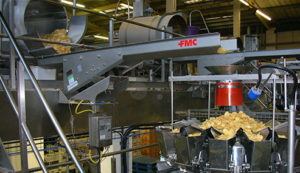
Powder and liquid process design. Handling, blending, drying and transfer, designed with the dust and solvent risks assessed rather than assumed.
Utilities and effluent. Steam, refrigeration, compressed air and trade effluent, including permit-constrained discharge.
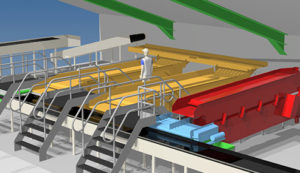
3D laser scanning. Survey of congested production areas so that new equipment fits the first time and the shutdown is not spent adjusting steelwork.
EPCM delivery under ISO 9001:2015 certified project methodology, with CDM 2015 duty holder support.
Sub-sectors we work across
FMCG covers a broad set of processes and the constraints differ sharply across them. A high-care food plant, an aerosol filling area and a spray drying tower each present a different problem, and the controls that suit one rarely transfer to another.
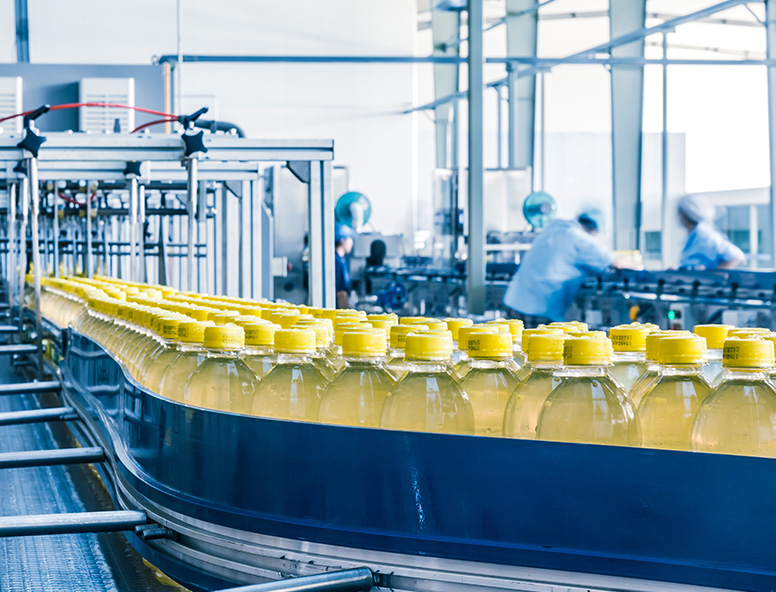
- Food and beverage processing – Hygienic design, CIP systems, combustible dust and CO2 asphyxiation risk.
- Personal care and cosmetics – ISO 22716 GMP, purified water systems, ethanol handling and aerosol filling.
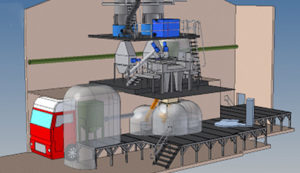
- Detergents, soaps and household chemicals – Spray drying tower dust explosion risk, surfactant handling and containment.
- Nutraceuticals and dietary supplements – Powder blending, dust control, allergen segregation and cross-contamination.
- Flavours, fragrances and aroma chemicals – Ethanol handling, odour and VOC permitting, and high-SKU changeover.
- FMCG liquids and powders – Changeover reduction, pneumatic conveying, CIP design and capacity constraint.
See all the sectors and industries we work in
When clients typically call us
- A customer or retailer audit has raised a non-conformance that needs a physical fix
- FSSC 22000 Version 7 transition planning has identified hygienic design gaps
- A combustible dust assessment is needed, or an existing one predates a change in materials or plant
- A free-from or allergen-segregated line has to be introduced into an existing building
- Capacity has to increase without a corresponding increase in footprint
- A trade effluent consent or environmental permit is constraining what production can do
Why FMCG manufacturers work with Projex
Most engineering consultancies that understand hygienic design do not carry process safety competence, and most that carry process safety competence come from chemical and do not understand the pace of a food factory. We work across both, which matters on a site where an ethanol store and a powder blending hall sit under the same roof.
Our teams work from Brighouse in West Yorkshire and the Wilton Centre in Redcar. We are certified to ISO 9001:2015, SafeContractor approved, and hold a Bronze EcoVadis sustainability rating.
We are also realistic about shutdowns. Most of our FMCG work is planned around a fixed and immovable window, and designed so that it can actually be built in the time available.
Frequently asked questions
Do we need a DSEAR assessment if we only handle food ingredients?
Very possibly, yes. Many common food powders form explosible dust clouds, and DSEAR applies to dangerous substances regardless of whether they are edible.
Can you help us prepare for the FSSC 22000 Version 7 transition?
Yes. We assess where physical facility changes are needed to close gaps, and we plan them against the audit timeline rather than against an open-ended programme.
Can you work in a live production environment?
Yes. Most of our FMCG projects are executed around live lines and planned shutdowns, with the sequencing designed accordingly.
Do you design CIP systems?
Yes, including coverage and capacity verification on existing systems that are no longer keeping pace with the plant they clean.
Talk to us about your project. Request a call